

The second day of the 2025 MLB playoffs is in the books and three out of four series are headed to a do-or-die Game 3.
The Los Angeles Dodgers are the lone team to wrap up their Wild Card Series, sweeping the Cincinnati Reds in dominating fashion. They’ll now move on to open a Division Series set against the Philadelphia Phillies Saturday.
The other three series, meanwhile, are into win-or-go-home territory Thursday after the New York Yankees beat the Boston Red Sox, the San Diego Padres beat the Chicago Cubs and the Cleveland Guardians beat the Detroit Tigers.
These best-of-three sets, all played at the stadium of the superior seed, will determine who advances to the more traditional structure of the playoffs, beginning with the Divisional Series. The Blue Jays, Mariners, Brewers and Phillies all received first-round byes this year and will get their playoff journeys started on Saturday.
Here now are winners and losers from the second day of the playoffs.
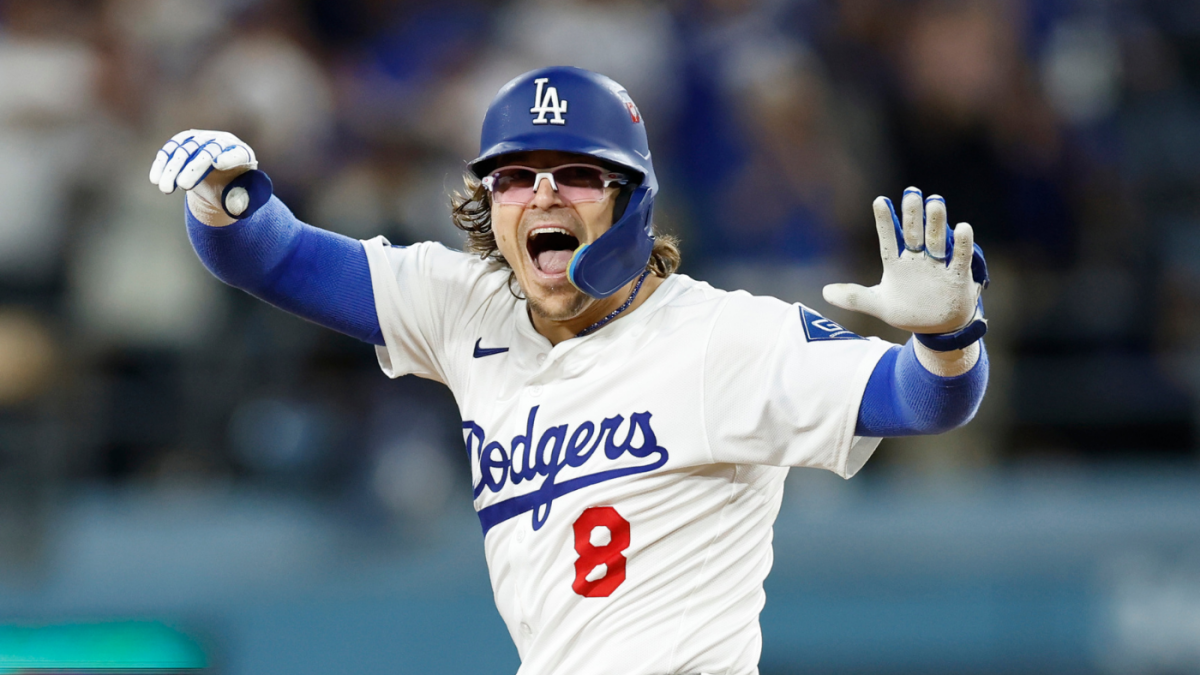
Winner: Mookie Betts
For much of the 2025 season, the story with Betts has been the excellent progress he’s made as a shortstop. In just his second season since making the transition to the most demanding spot on the diamond, he’s evolved into a Gold Glove candidate. Seemingly that progress came at a cost to his bat, which lagged his recent and career norms for much of the season.
Betts eventually found his level. His numbers picked up in the second half, and in September he slashed .299/.343/.557. In the Game 1 win against the Reds, he went 2 for 4 with a walk, and he was even better in the clinching Game 2 as he went 4 for 5 with three doubles, three RBI, and a run scored. The second of those three doubles helped break it open in the sixth:
As well, Betts’ stellar glove work at short played a role minutes earlier in the game. In the top of the sixth, the Reds — trailing just 3-2 at that juncture — loaded the bases with no outs. That’s when Betts handled a tough, short-hop grounder from Austin Hays and then went home for the force out on TJ Friedl. One could perhaps argue that Betts after making the nifty snare should’ve tried to turn a double play, but at that point keeping the tying run off the board was more important. Betts’ instincts were validated when Yoshinobu Yamamoto struck out the next two batters to end the threat.
Loser: The Reds in the playoffs
Look, there’s no real shame in getting swept in two games by the defending champs when you’re the skin-of-your-teeth third wild card team. This, though, goes deeper than that. The Reds haven’t won a playoff series since their 1995 NLDS sweep of the Dodgers, and they’ve now lost eight straight postseason games. Since that NLDS sweep in ’95, the Reds are 2-15 in postseason games. That’s not quite a Twins-grade stretch of playoff struggles, but it’s not far from it. It will be at least another year before the Reds will have another chance to flip that particular unfortunate script.
Winner: Players who sat in Game 1
For left-on-left matchup reasons, Jazz Chisholm Jr. and Ben Rice were not in the Yankees’ Game 1 lineup against Garrett Crochet and the Red Sox. Both started Game 2 and both helped the Yankees extend their season. Rice smacked a two-run home run in the first inning, then Chisholm saved a run with a diving play in the seventh and scored the go-ahead run in the eighth. Instant impact, they provided.
For Rice, the home run was his third in two games dating back to the regular season. He hit .316/.349/.582 in September and seemed to be on everything. Rice excels at hitting the ball hard, hitting the ball in the air, and doing it without striking out much. This swing is geared to do damage:
Chisholm drew a walk against a tiring Garrett Whitlock in the eighth and then scored from first base when Austin Wells’ single hit the side wall and deflected away from right fielder Nate Eaton. It was a break for the Yankees, but also a break that only mattered because Chisholm is one of the fastest players in the league, and was running in the 3-2 count with two outs.
Yankees manager Aaron Boone said Chisholm will be in the Game 3 lineup against lefty Connelly Early. Rice or Paul Goldschmidt at first base has not yet been decided. Given the way he’s swung the bat lately, it would be awfully tough to keep Rice on the bench again. It didn’t work in Game 1. No need to go back to it in Game 3.
Loser: Alex Cora’s quick hook
To be clear, I understood the strategy and appreciated the urgency, but it did backfire. Red Sox starter Brayan Bello, who had a sluggish September, gave up the first-inning homer to Ben Rice, and was removed after facing 11 batters and getting seven outs. The Red Sox have five lefties in the bullpen and New York’s lineup has exploitable pockets of lefties, so matching up made sense.
And for five innings, it worked. Five Red Sox relievers — Justin Wilson, Justin Slaten, Steven Matz, Zack Kelly, Garrett Whitlock — held the Yankees to one run spanning the third through seventh innings. Whitlock went two full innings only once in his final 38 regular-season appearances and Cora asked him for a second inning in Game 2. That’s when things went sideways.
With his pitch count up over 40, Whitlock walked Chisholm with two outs in the eighth, then gave up a single to Wells. A funky carom off the sidewall allowed Chisholm to score the game-winning run all the way from first base. Whitlock’s 47 pitches in Game 2 were his most as a reliever since August 2023. Cora asked Whitlock for a lot and it backfired.
The strategy was sound. Use those bullpen lefties to match up with New York’s lefty-heavy lineup. It just didn’t work, and it might’ve compromised Whitlock’s availability for Game 3 as well. That’s a double whammy for Cora and the Red Sox.
Winners: The Padres bullpen
With all due respect to Manny Machado and his big two-run home run, the story of Game 2 was the Padres’ bullpen. Adrián Morejón took over with two runners on base and a 1-0 Padres lead in the fourth inning. He worked 2 ⅓ perfect innings before giving way to Mason Miller. The trade-deadline acquisition has some of the best pure stuff you’ll ever see from the mound. He struck out three in the seventh and the first two hitters of the eighth before hitting Michael Busch with a pitch. Closer Robert Suarez took over and while things weren’t quite as easy, they never got overly worrisome for the Padres.
That was 5 ⅓ innings from just three relief pitchers who gave up one hit and zero walks while striking out six. The margin of error the entire time was very low and the three big guns from the vaunted Padres’ bullpen stepped up and did their job.
Other pitchers like Jeremiah Estrada will be involved and sometimes the starter will go deeper, but the general formula for the Padres’ Game 2 win is how it’ll have to be if they’re to make a deep playoff run. — Matt Snyder
Mason Miller makes history, but Wild Card Series Game 3 may put Padres flamethrower to the test vs. Cubs
Dayn Perry

Losers: Fans of starting pitching
We could go with the Cubs’ offense here if we wanted, but, man, the Padres’ pitching staff had such ridiculous stuff it would feel like we’re taking away from it. How many teams would have scored a bunch of runs against this collection of arms, the way they were throwing, on Wednesday? The Padres’ pitchers just overwhelmed the Cubs.
Dylan Cease started off dealing for the Padres. Through 3 ⅔ innings, he struck out five and worked around three hits (he was charged with one walk, but it was an intentional walk to the last batter he faced). He had only thrown 69 pitches when he was removed with a 1-0 lead in the fourth inning.
On the Cubs’ side, they used an opener in Andrew Kittredge and he gave up a run in the first inning. Shota Imanaga, normally a starter, followed and only went four innings on 67 pitches.
There’s been a movement to bring back the starting pitcher as a “main character” type the last few years in Major League Baseball. These teams had not interest in that Wednesday. — Matt Snyder
Winner: Guardians offense (finally)
The top criticism of this Guardians club has been a weak lineup that ranked 28th in runs scored and park-adjusted offense during the regular season. The Guardians only plated one run in Tuesday’s series opener, and they had just one run to show through seven on Wednesday.
Then Cleveland strung together an impressive eighth-inning rally that not only proved they had it in them but also forced a decisive Game 3 on Thursday.
Second baseman Brayan Rocchio delivered a go-ahead home run to give Cleveland a 2-1 advantage. Steven Kwan and Daniel Schneeman then hit back-to-back doubles before Bo Naylor swatted a three-run home run. Just like that, the Guardians had a legitimate big inning.
Add in George Valera’s home run earlier in the bottom of the first inning, and all five of the Guardians’ extra-base hits in this series came in Game 2. We’ll see if they can maintain those vibes on Thursday. — R.J. Anderson
Loser: Tigers offense
Whatever happens against the Guardians on Thursday, the Tigers can blame their lineup for Game 3 being necessary in the first place. Sure, they notched seven hits, six walks, and two hit by pitches, but they finished Game 2 with just one run because they couldn’t cash in.
Indeed, the Tigers stranded 15 runners by going 1 for 15 as a team with runners in scoring position. Shortstop Javier Báez provided the one — and it was nearly enough to give the Tigers a 2-1 advantage had Zach McKinstry not been tagged out at third to invalidate the second RBI. Parker Meadows, Wenceel Pérez, Riley Greene, Kerry Carpenter, and Spencer Torkelson each wasted multiple opportunities to drive in at least one, and perhaps more.
The Tigers’ 43 plate appearances were the most ever in a playoff game where a team scored just a single run. The Tigers left the door open for the Guardians to break the 1-1 tie, and break it they did in the bottom of the eighth, plating five unanswered runs on two home runs that bookended consecutive doubles. — R.J. Anderson